Frequently Asked Questions
The answers provided below are based on answers previously given to customers' questions.
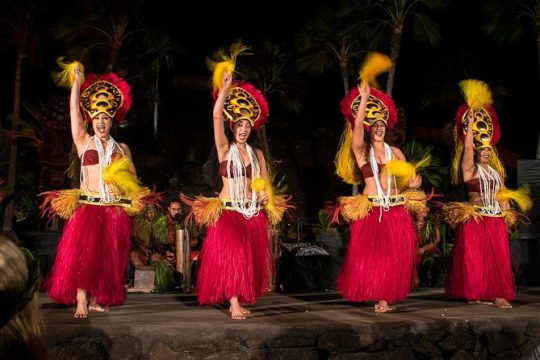
Hawaii is the only American state made up entirely of islands, a chain of volcanic peaks rising from the middle of the Pacific, farther from a continent than almost any other inhabited land. Polynesian voyagers settled here centuries before European ships arrived, and their language, music and deep respect for the land still shape everyday life. Each island keeps its own pace: city beaches and wartime memorials on Oahu, sunrise craters and whale-filled channels around Maui, living lava country on the Big Island, and the sheer green cliffs of Kauai. Across the chain you can snorkel beside sea turtles, hike through rainforest to waterfalls, learn to surf, sail at sunset, fly over valleys no road reaches, or settle in for an evening of hula and island food. Use this guide to compare the islands and decide where your days are best spent.
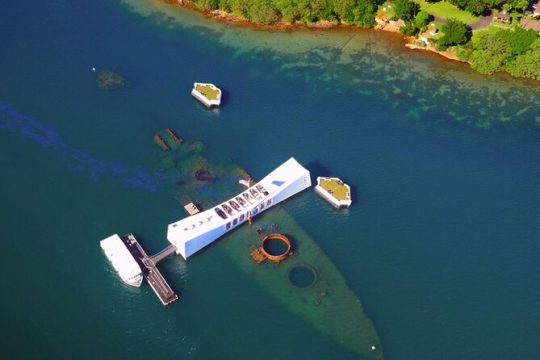
Oahu is home to most of the state's residents and to its capital, and it is the island to pick if you like plenty of choice within a short drive. Waikiki Beach puts gentle surf lessons, outrigger canoe rides and glass-bottom boat trips right in front of the hotels, while Diamond Head offers a short, steep climb to a crater rim with wide views over the coast. The USS Arizona Memorial at Pearl Harbor draws visitors for a quiet and moving morning, and Iolani Palace tells the story of the Hawaiian monarchy.
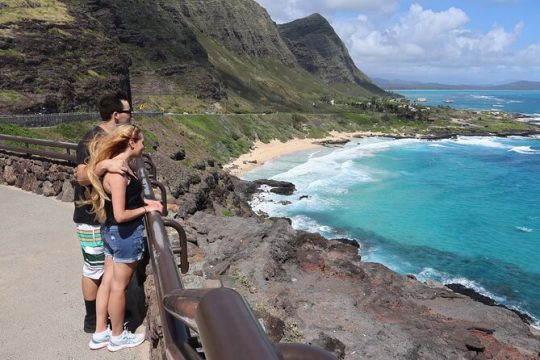
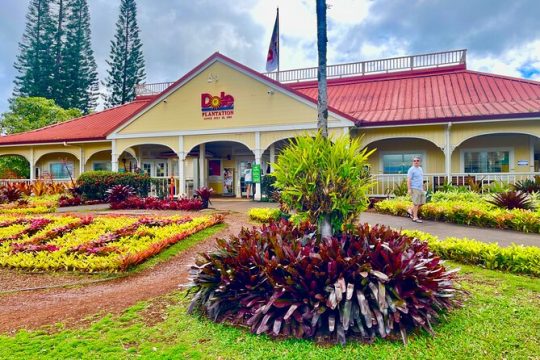
Leave the high-rises behind and the island changes fast. The North Shore is known around the world for big-wave surfing and laid-back beach towns, the Halona Blowhole and the trail to Makapuu Lighthouse line the rugged southeast coast, and the Dole Plantation sits among the fields of the central plain.
Maui blends polished resort beaches with wild, empty uplands. Haleakala, the great volcano that forms most of the island, is the classic place to watch the sun rise above a sea of clouds, and its national park crosses a cinder desert streaked with red and gray. On the far side of the island, the winding Hana Highway twists past a bamboo forest, the black sand of Waianapanapa State Park and one waterfall after another.
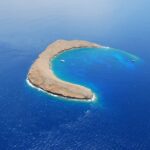
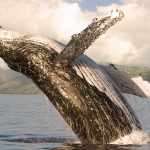
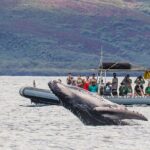
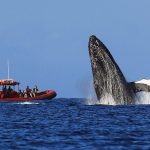
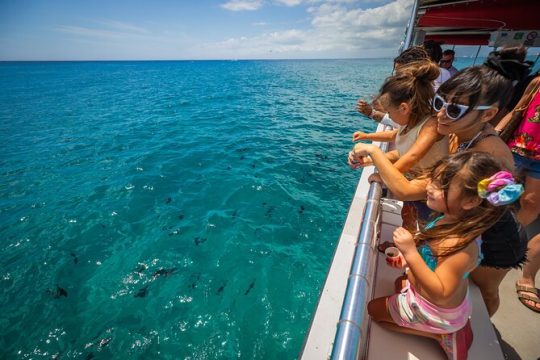
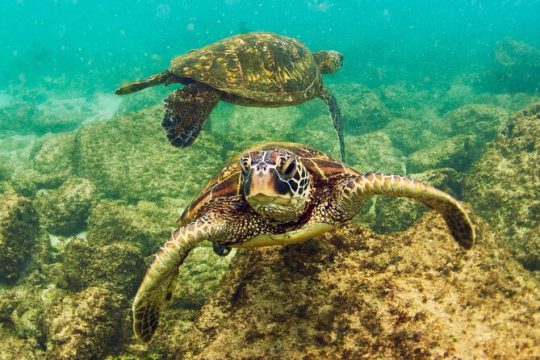
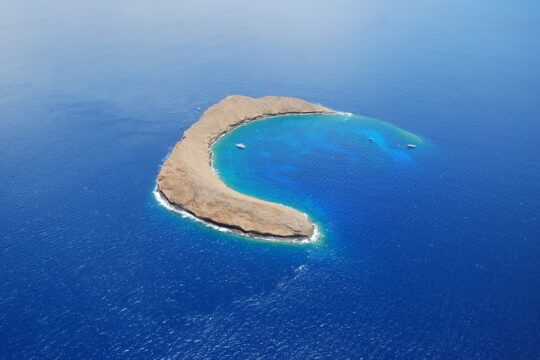
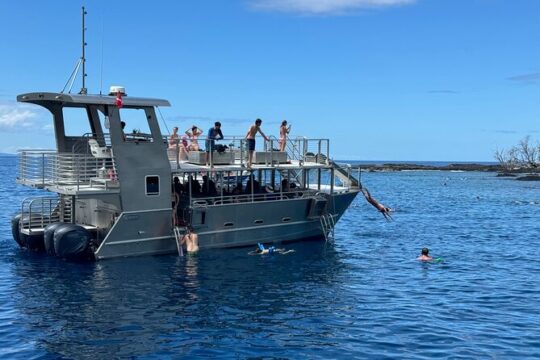
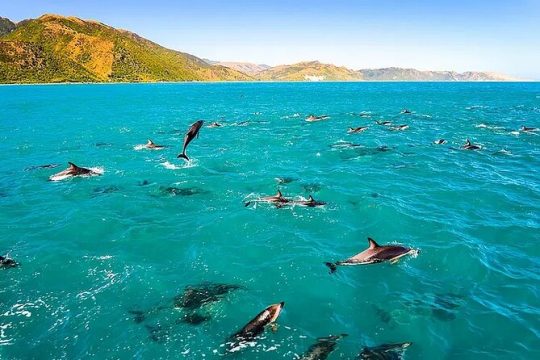
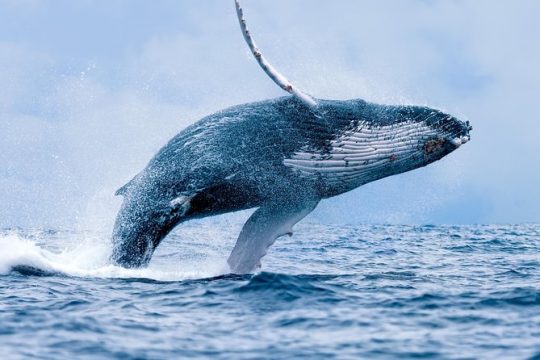
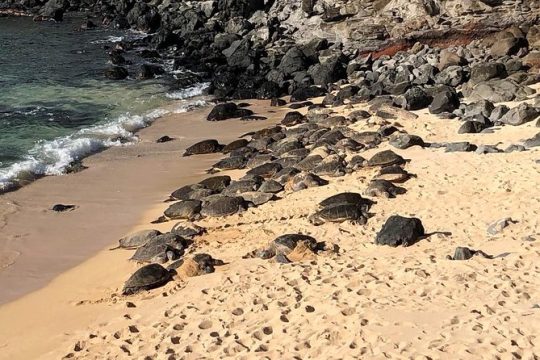
Out on the water, boats head to Molokini Crater, a sunken volcanic rim where the water is often remarkably clear, and to reefs where green sea turtles graze. Humpback whales gather in the shallow channels around Maui for part of each year, which makes whale watching one of the island's best-loved outings. The dry, sunny western and southern shores hold most of the places to stay.
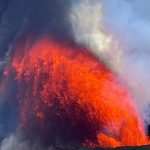
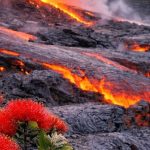
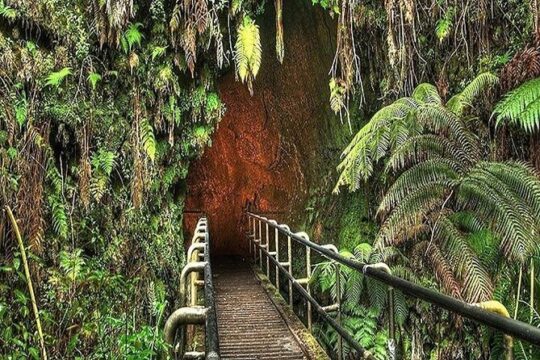
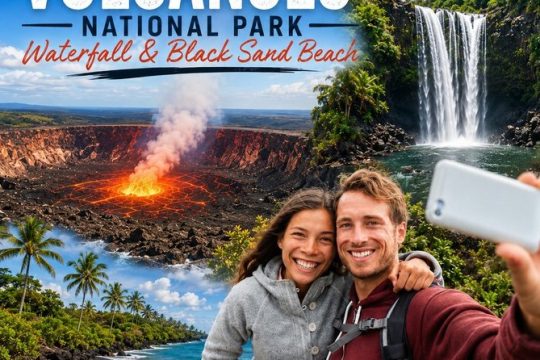
The Big Island is larger than all the other Hawaiian islands put together, and its volcanoes are still building it. Hawaii Volcanoes National Park lets you walk through the Thurston Lava Tube, follow the Chain of Craters Road down to the sea cliffs and peer into steaming craters. The summit of Mauna Kea is one of the best places on Earth to study the night sky.
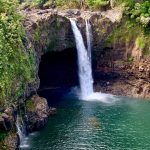
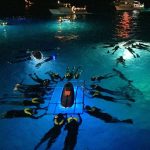
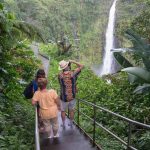
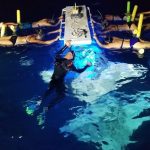
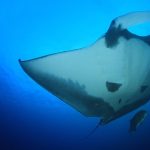
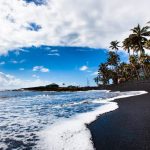
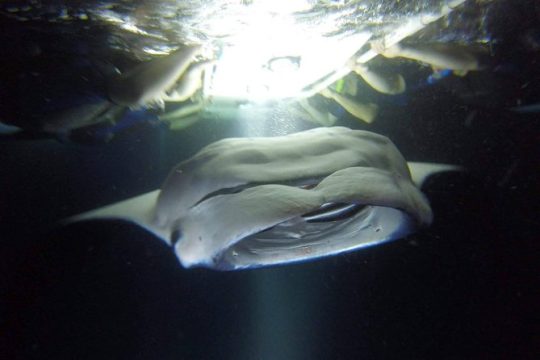
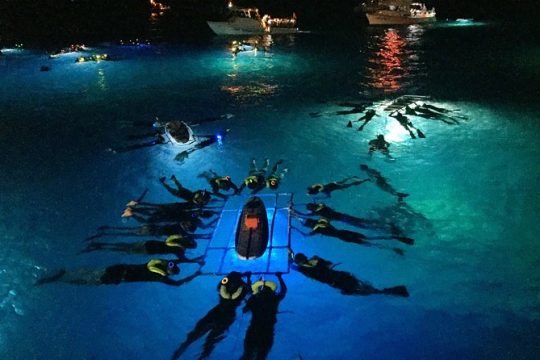
The island has two very different faces. On the dry leeward side, you can snorkel in Kealakekua Bay near the Captain Cook Monument or float at night while manta rays feed below you. The wet windward side is a land of rainforest, with Rainbow Falls and Akaka Falls a short drive apart and the black sand of Punaluu Beach on the road toward the volcano.
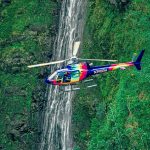
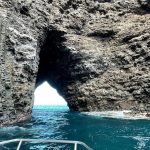
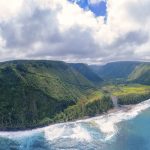
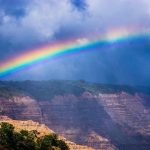
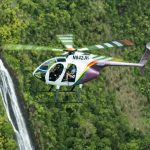
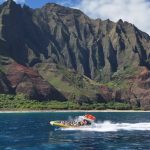
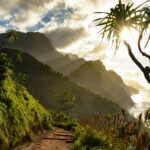
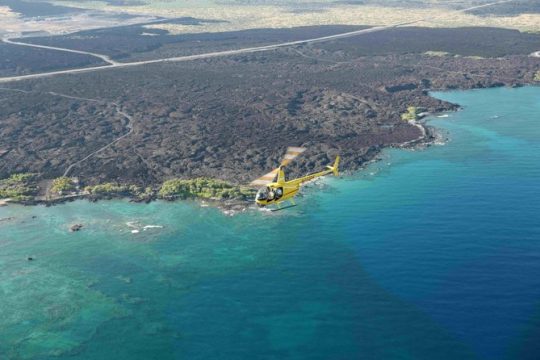
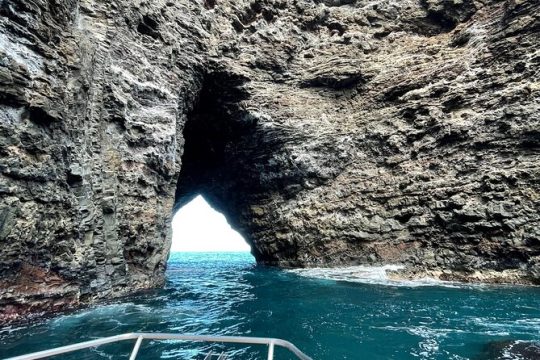
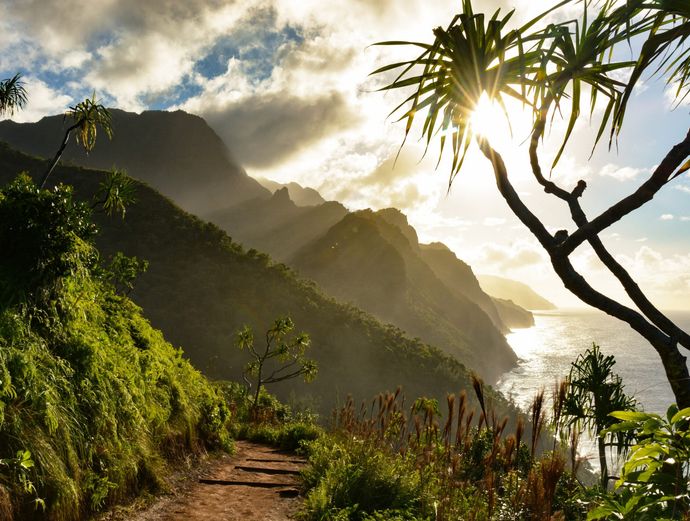
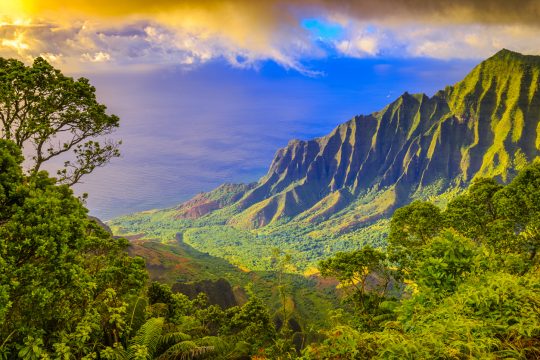
Kauai is the oldest of the main islands, and wind and rain have carved it into deep valleys and fluted ridges. The Na Pali Coast, a run of towering sea cliffs with no road along it, is seen from a boat, a kayak, a helicopter or a demanding hiking trail. Waimea Canyon slices through the west side in bands of red and rust, and Kokee State Park above it leads to the Kalalau Lookout over a deep green valley.
Towns stay small here and life moves slowly. Hanalei Bay curves beneath the mountains in the north, the Wailua River carries paddlers inland toward waterfalls, and Spouting Horn shoots sea spray through a hole in the lava rock on the south shore. Kauai suits travelers who want beaches, gardens and hikes more than nightlife.
Beyond the four main islands, Hawaii has quieter places for travelers who prefer few crowds and simple comforts. Some are a short flight away, and others can only be admired from the deck of a boat.
Most visitors choose one or two islands rather than trying to see them all, since moving between them means a flight. Rent a car on the neighbor islands, where buses are limited, and allow time for slow, winding roads. Most outings start in the morning, when seas are often calmer, nearly all can be cancelled without charge if plans change, and about half suit families with children. More than a third can be arranged as a private trip. Wherever you go, use reef-safe sunscreen, give turtles and monk seals plenty of room, and take warning signs about currents seriously.
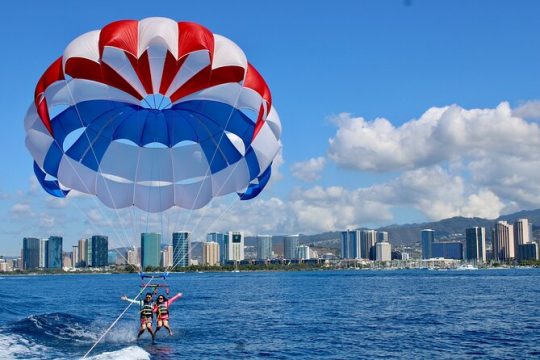
#1Waikiki Beach is the long curve of sand on Honolulu's south shore where modern beach life in Hawaii took shape. Hotel towers rise behind it, Diamond Head closes the view to the east, and gentle rolling waves have drawn swimmers, surfers and canoe paddlers to this water for generations. Hawaiian royalty rode waves here long before the first hotels went up, and surfing was part of chiefly life along this shore. In the early 20th century, Duke Kahanamoku and the Waikiki beach boys taught visitors to stand on long wooden boards and to ride outrigger canoes, and Duke's Olympic swimming fame carried the sport around the world. A bronze statue of him, arms open and backed by a surfboard, stands near the sand and is usually hung with fresh lei. What looks like one beach is really a chain of named sections, from Kahanamoku Beach near the lagoon in the west through Fort DeRussy, Gray's Beach, Kuhio Beach and Queen's Beach to Sans Souci at the Diamond Head end. Much of the sand was brought in over the decades to replace what the sea carried away, and low walls and groins help hold it in place. Two grand old hotels still face the water: the white colonial-style Moana Surfrider, the first hotel on the beach, and the pink Royal Hawaiian, which opened in the age of ocean liners. Near Kuhio Beach, four large basalt boulders known as the Wizard Stones honor healers from Tahiti who, in Hawaiian tradition, passed their powers into the rocks before sailing home. Out past the reef, the surf breaks carry names of their own, such as Canoes and Queens, and on a calm evening you can watch outrigger crews and longboarders share the same long swells as the sky turns gold behind them.
More
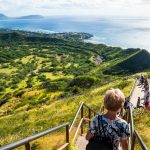
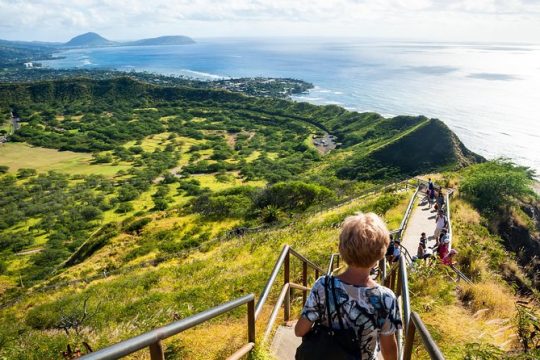
#2Diamond Head is the volcanic crater that rises above the eastern end of Waikiki and gives Honolulu its best-known silhouette. Hawaiians call it Leʻahi, and the broad, ridged rim you see from the beach is the edge of a cone formed in a short, explosive eruption hundreds of thousands of years ago. The Hawaiian name is usually translated as brow of the tuna, after the shape of the summit ridge seen from the sea. The English name came from British sailors in the 19th century who found sparkling calcite crystals in the rock and mistook them for diamonds. The crater itself was born when rising magma met groundwater, blasting ash and rock fragments into the air that settled and hardened into the tuff of the rim. In the early 20th century the US Army made the crater part of the coastal defenses of Oahu. Soldiers cut passages through the walls, built a fire control station at the summit to direct artillery, and placed gun batteries along the slopes, while the crater floor became a military reserve. Those works shaped the route to the top, which climbs old switchbacks and concrete steps the army left behind. The area is now a state monument, and a small lighthouse stands on the shore below the seaward face. From the top, the view takes in the whole sweep of the south shore: the hotels of Waikiki, the downtown towers, the reefs in shades of blue and, to the east, the headland of Koko Head. Inside the rim, the crater floor is a dry, grassy bowl dotted with kiawe trees, a sharp contrast with the wet green valleys only a few miles inland, and a reminder of how much the weather on Oahu changes from one side of a ridge to the other.
More
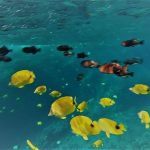
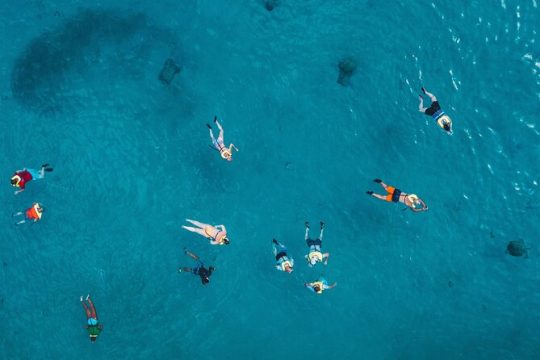
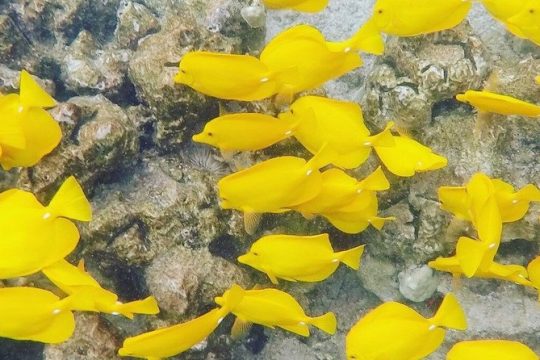
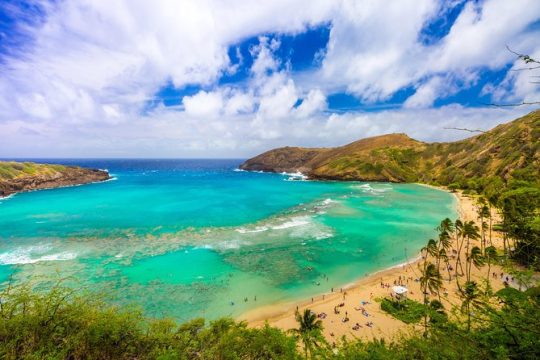
#3Hanauma Bay is a protected cove on the far southeast tip of Oahu, where a reef spreads through clear, shallow water inside the curved walls of an old volcanic cone. It is among the best places in the islands to put your face in the water and meet a healthy Hawaiian reef up close, with fish that barely notice the people floating above them. Underwater, the reef flat comes alive within a few strokes of the beach. Yellow tangs drift in loose schools, parrotfish crunch on dead coral and leave fine white sand behind them, and the reef triggerfish known as humuhumunukunukuapuaʻa, the state fish, hovers near the rocks. Green sea turtles sometimes glide through, and farther out the reef drops toward deeper channels where larger fish cruise in bluer water. The bay you see today owes a lot to a rescue effort. By the later decades of the 20th century the beach drew enormous daily crowds, and people fed the fish, walked on the coral and clouded the water with sunscreen. Conservation rules turned the bay into a preserve where nothing may be taken, and visitor caps, a reef education program and regular rest days followed. The coral has been slowly recovering ever since, a hopeful sign for reefs elsewhere. The setting itself tells a geological story. The bay formed inside a tuff cone, a ring of hardened volcanic ash thrown up when rising magma met water, and the ocean later broke through the seaward wall and flooded the crater. That is why steep, grassy slopes wrap almost all the way around the sand, and why the view from the top feels like looking into a bowl filled with turquoise water and dark patches of coral.
More
#4Halona Blowhole is a natural sea spout on the rocky southeast coast of Oahu, where waves force water up through an opening in the lava shelf and send it bursting into the air. It sits on the Ka Iwi shoreline between Hanauma Bay and Sandy Beach, where dark cliffs drop straight into deep blue water. The blowhole began as a lava tube, formed when molten rock flowed toward the sea during the volcanic activity that also built Koko Head and Koko Crater. Over time the ocean broke into the tube at the waterline. When a swell surges in, the water is squeezed through the narrow passage and escapes through the hole in the roof with a roar and a hiss, and on a rough day the spray climbs well above the rocks. In Hawaiian, halona means a lookout or a place to peer out, a fitting name for a point with such a long view along the coast. On clear days you can see across the Kaiwi Channel to Molokai, and sometimes Lanai beyond it. Just below, Halona Cove is a tiny pocket of sand between lava walls, famous as the setting of the beach kiss in the film From Here to Eternity. The rock here is rough and layered, with ledges, cracks and pools carved by constant surf. Seabirds ride the updrafts along the cliffs, and the color of the water shifts from turquoise in the shallows to deep cobalt offshore. In the quiet between surges you can hear the ocean draw breath in the cavern below, then a hollow boom as the next wave arrives and the white plume rises again. Few places on the island show so plainly how lava and sea keep reshaping each other, one wave at a time.
More
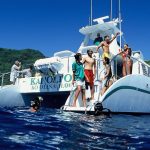
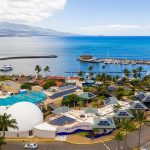
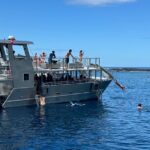
#5Kewalo Basin is a compact harbor on the Honolulu waterfront, tucked between Ala Moana Beach Park and the fast-changing Kakaako district. It began life as a shallow reef flat, grew into the home port of the city's fishing fleet, and now fills its slips with sportfishing boats, sunset cruisers and the occasional research vessel. The basin was dredged early in the twentieth century to give commercial fishermen a base away from the crowded main harbor downtown. Many of the first crews were Japanese immigrants who chased skipjack tuna aboard wooden sampans, and a cannery a few blocks inland packed their catch for markets far beyond Oahu. For decades the smell of fish, salt and diesel defined this corner of town, and the sampan men were among the best-known figures on the shore. As that old fleet dwindled, charter captains took over the docks. Boats now head offshore after marlin, tuna and mahi-mahi, trace the coastline at dusk, or go looking for humpback whales during the cooler months when the animals arrive from Alaska to breed and give birth. The University of Hawaii keeps a marine laboratory beside the water, where scientists have long studied coral, larvae and other reef life. On the seaward side, a grassy strip shaded by trees looks across the channel to a popular surf break that locals simply call Kewalos, where riders catch waves right at the harbor mouth. Turn around and the glass towers of Ward Village rise above former warehouses and auto shops. Few places in Honolulu show so clearly how a working shoreline has turned toward leisure within a single lifetime, while the fishing heritage still lingers in the boats and the people who crew them.
More
#6Sandy Beach Park is a broad strip of golden sand on the southeast shore of Oahu, known across the islands for a thundering shore break that draws expert bodysurfers and bodyboarders. Waves rise out of deep water and slam onto the steep beach, so the show from the sand is as much a part of the place as the ocean itself. Locals often call it Sandys, and it has long been a proving ground for young riders from the east side of Honolulu. Barack Obama, who grew up in the city, is among the well-known bodysurfers who have ridden its waves on visits home. The same power that thrills experts has also given it a reputation as one of the most dangerous beaches in Hawaii, with a long record of serious neck and back injuries among visitors who misjudge the surf. The beach lies on the Ka Iwi coast, where lava from the vents of the Koko Rift once poured down to the sea. Koko Crater rises right behind the park, its eroded slopes ridged like folded cloth, while Halona Blowhole and its sea cliffs sit just to the west. To the east, the shoreline runs on toward Makapuu Point and its lighthouse, one of the wildest stretches of coast close to the city. The big grassy field behind the sand is a favorite spot for family picnics, and kite fliers take advantage of the steady trade winds. Sunrise here is popular with photographers, as the first light catches the spray thrown up by each breaking wave. Even on calmer days the water can look deceptively gentle, a reminder that the beauty of this coast and its force come from the same open ocean.
More
#7The National Memorial Cemetery of the Pacific fills the bowl of Punchbowl Crater above downtown Honolulu, a wide green lawn of flat headstones set inside the rim of an extinct volcano. It honors men and women who served in the US armed forces, and it draws visitors from across the Pacific who come to pay their respects. The crater is a tuff cone formed in an eruption tens of thousands of years ago, part of the same volcanic series that shaped Diamond Head and Koko Head. Its Hawaiian name, Puowaina, is often translated as hill of sacrifice, and tradition holds that those who broke sacred law were put to death at an altar here. In the days of the kingdom, cannons on the rim fired salutes on royal occasions. The cemetery was dedicated a few years after World War II, first for service members killed in the Pacific, and it later received veterans of Korea, Vietnam and other conflicts. Among those buried here are the war correspondent Ernie Pyle, the astronaut Ellison Onizuka and Senator Daniel Inouye, who earned the Medal of Honor in Europe. Many headstones carry the names of soldiers from the Japanese American units of Hawaii, whose courage in battle became legend. At the head of the central mall, a broad stairway climbs to the Honolulu Memorial, watched over by a tall statue of Columbia, a female figure standing at the bow of a ship with a laurel branch in her hand. Along the stairs, the Courts of the Missing list thousands of names of those lost and never recovered, and galleries on either side hold mosaic maps of the great Pacific campaigns. From the lookout on the rim, the view sweeps over the city to the sea.
More
#8The King Kamehameha Statue is a gilded bronze figure of Kamehameha the Great that stands before Aliʻiōlani Hale in downtown Honolulu. Dressed in a feathered cloak and helmet, with a spear in one hand and the other stretched out in welcome, it honors the chief who brought the Hawaiian Islands together under one rule. Kamehameha was born on the Big Island and rose through a long series of wars and alliances to unite the islands early in the 19th century, founding a kingdom that lasted until the overthrow of its last queen. He is remembered for the Law of the Splintered Paddle, which protected ordinary people traveling the roads, and his name is still honored with a state holiday. The statue has an unusual story. The legislature commissioned it to mark the centennial of Captain Cook's arrival in the islands, and the American sculptor Thomas Gould modeled it in Florence before it was cast in Paris. The ship carrying it sank near the Falkland Islands, so a second casting was made and unveiled in Honolulu during the coronation festivities of King Kalākaua. The first statue was later salvaged and now stands in Kapaʻau, in the king's home district of North Kohala. Behind the figure, Aliʻiōlani Hale was planned as a royal palace and became the kingdom's government building instead, and it now houses the state Supreme Court and a museum of judicial history. On Kamehameha Day each June, long strands of flower lei are hung from the outstretched arm and shoulders, turning the street into a celebration of Hawaiian culture with chants and hula. Versions of the figure also stand in Hilo and in the US Capitol in Washington.
More
#9Kapiolani Park is the oldest public park in Hawaii, a sweep of lawns and shade trees between the end of Waikiki and the slopes of Diamond Head. King Kalakaua dedicated it in the late nineteenth century and named it after his queen, Kapiolani, giving the people of Honolulu a place to gather outdoors. In its early years the park had a very different look. A horse racing track ran across the open ground, ponds and lagoons were dug through the lowlands, and the city's well-to-do came out by carriage and later by streetcar to picnic and watch the races. The ponds were filled in as Waikiki was drained and developed, but the park kept its broad open spaces, and today it covers a very large area by city standards. The grounds hold a surprising number of landmarks. The Honolulu Zoo occupies one corner, and the Waikiki Shell, an open-air concert stage, hosts music under the stars. The Kapiolani Bandstand is a home stage for the Royal Hawaiian Band, an ensemble founded under the Hawaiian kingdom that still plays free concerts. Along the ocean edge you find the Waikiki Aquarium and the War Memorial Natatorium, a grand saltwater pool built to honor those who served in the First World War. Most of all, the park is where Honolulu comes to play. Families spread out under the huge banyans, kite flyers make use of the steady trade winds, and soccer and rugby games fill the fields on weekends. The Honolulu Marathon finishes here every December, and festivals, craft fairs and cultural celebrations take over the lawns through the year. With Diamond Head rising as a backdrop and the ocean a few steps away, it feels like the green heart of Waikiki.
More
#10The Hawaii State Capitol is the home of the state legislature and the governor's office in downtown Honolulu, and it is one of the most unusual statehouses in the country. Instead of a classic dome, the building opens to the sky, with every part of its design meant to echo the landscape and spirit of the islands.The Capitol was completed about a decade after Hawaii became a state, replacing Iolani Palace as the seat of government. Its architects chose bold modern lines and packed the structure with symbolism. A wide reflecting pool surrounds the building, standing for the ocean that encircles the islands. Tall columns shaped like royal palm trunks hold up the roof, and the two legislative chambers rise in cone-like forms that recall volcanoes. At the center, an open courtyard reaches up to the sky, so sun, wind and rain all pass through the heart of the building.Art fills the spaces in between. A large mosaic on the courtyard floor, made of countless glass tiles, shifts in color as the light changes through the day. Inside the chambers, chandeliers shaped like the sun and the moon hang above the lawmakers, and koa wood and Hawaiian motifs appear throughout. From the upper floor, you can look out across the palace grounds toward the harbor.Outside, two statues draw the most attention. One shows Queen Liliuokalani, the last monarch of the Hawaiian Kingdom, holding the song she wrote, while the other honors Father Damien, the Belgian priest who cared for leprosy patients on Molokai. Nearby, an eternal flame honors those from Hawaii who served in the Second World War, and a replica of the Liberty Bell stands on the grounds, linking the island state to the nation it joined.
More
#11Ala Moana Center is Honolulu's largest shopping center, a sprawling open-air complex near the ocean between Waikiki and downtown. Its covered walkways, gardens and fountains link department stores, island boutiques, luxury labels and food counters, and for many residents it is as much a gathering place as a place to shop. The center grew from swampy land along the shore that the Dillingham family filled and developed in the middle of the twentieth century. When it opened, it was among the largest shopping centers in the United States, and it helped move Honolulu's commercial life away from the old downtown streets. Its name, meaning path to the sea, comes from the boulevard that runs past its front. Generations of island families have since made it their usual stop for school clothes, holiday gifts and a meal out. Today the mix reflects Hawaii's place at the crossroads of the Pacific. Shops from Japan and across Asia sit beside surf brands, local designers and makers of aloha shirts, while food stalls serve poke, ramen, plate lunches and shave ice. A central stage hosts hula shows, music and festivals, and a koi pond full of bright fish draws children and photographers. Across the boulevard lies Ala Moana Beach Park, where residents swim, paddle and picnic along calm water, so shopping bags and beach towels often share the crosswalks. The upper levels look out toward the Koolau Mountains on one side and the ocean on the other, and the holiday season brings lights and decorations that make the walkways festive. For a visitor, it offers a lively glimpse of everyday island life, where families meet for lunch, students hang out after class and shoppers from every corner of the Pacific mingle in the trade wind breeze.
More
#12Honolulu Chinatown is one of the oldest Chinatowns in the United States, a lively grid of low brick and stone buildings at the edge of downtown, close to the harbor. Its streets are crowded with markets, lei makers, herb shops, bakeries and noodle counters, and the smell of roast duck and fresh flowers drifts along every block.The district took shape in the nineteenth century, when Chinese workers who came to labor on the sugar plantations finished their contracts and opened shops near the waterfront. Other communities soon joined them, and today you also find Vietnamese, Filipino, Korean, Thai and Japanese businesses side by side. Two great fires swept the neighborhood around the turn of the twentieth century, the second set by health officials trying to contain plague, and much of what stands now was rebuilt in the years that followed.Walking its streets shows how much of that past survives. Oahu Market, an open-air hall that has sold fish, meat and produce for generations, still bustles in the morning. Lei stands on Maunakea Street string plumeria, orchids and pikake by hand, and herbalists weigh dried roots and seeds from wooden drawers. By Nuuanu Stream, a statue honors Sun Yat-sen, the founder of modern China, who spent part of his schooling in Honolulu.Chinatown has also become the heart of Honolulu's arts scene. Galleries, design studios and cocktail bars fill restored storefronts, and the restored Hawaii Theatre, an elegant old performance hall, hosts concerts and shows. On the first Friday of each month, crowds drift between open galleries and live music late into the evening. Celebrations for the Lunar New Year bring lion dancers, drums and firecrackers to the streets each winter, a vivid sign that the neighborhood's roots run as deep as ever.
More
#13The Statue of Duke Kahanamoku stands on the waterfront at Waikiki, a larger-than-life bronze of Hawaii's most famous waterman with his arms spread wide in welcome. Behind him rises a long surfboard, and the figure is almost always draped in fresh lei left by locals and visitors who come to honor him. Duke Paoa Kahanamoku grew up swimming and surfing in these very waters around the turn of the twentieth century. He became an Olympic champion, winning gold medals in freestyle swimming at two Olympic Games and setting world records that astonished the sporting world. Between competitions he traveled widely, giving surfing demonstrations that introduced the sport to Australia and the American mainland, which is why he is often called the father of modern surfing. At home he was just as admired. Duke was one of the original Waikiki beach boys who taught visitors to ride waves and paddle canoes, and he later served for many years as the sheriff of Honolulu. He also acted in Hollywood films, and he became famous in California for using his board to pull several fishermen from heavy surf after their boat capsized. Throughout his life he was seen as an ambassador of aloha, a gentle and generous figure who carried the spirit of the islands wherever he went. The bronze was unveiled late in the twentieth century, roughly a hundred years after his birth. Not everyone welcomed its design. Some surfers pointed out that it shows Duke with his back to the ocean, something a true waterman would rarely do, and the debate became part of the statue's story. Today it is one of the most photographed spots in Waikiki, a meeting point where surfers, families and fans pause beside the beach where he learned to ride his first waves.
More
#14Waikiki is the oceanfront district of Honolulu that stretches from the Ala Wai Canal to the slopes of Diamond Head. Its name means spouting fresh water in Hawaiian, a reminder of the springs and streams that once fed this low ground, and today it is a dense, walkable neighborhood of hotels, shops, parks and beach. For centuries the area was wetland, laid out in taro patches and fishponds, and it served as a favored retreat for Hawaiian chiefs and later for the monarchs of the kingdom. Princess Kaʻiulani grew up at Ainahau, a Waikiki estate remembered for its banyan tree and peacocks, and a statue of her stands in a small park nearby. In the early 20th century the Ala Wai Canal was dug to drain the marshes, and the reclaimed land filled with streets, homes and, in time, the towers that define the skyline. Kalakaua Avenue, named for the king who reigned in the late 19th century, is the main promenade. Along it you find the open-air International Market Place, built around a great banyan, and the Royal Hawaiian Center with its gardens and cultural classes. The avenue runs right beside the sand, so the line between city and seashore is thin, and surfboards on racks share the sidewalks with shoppers and strollers. At the eastern end, Kapiolani Park opens up a wide stretch of lawn and shade trees, set aside by King Kalakaua and named for his queen. It holds the Honolulu Zoo, the Waikiki Aquarium, a bandstand and the Waikiki Shell, an outdoor stage for concerts. Hula performances, surf contests and parades fill the calendar, and in the evenings the district glows with torchlit hotel courtyards and music drifting out from beachfront lanai.
More
#15Kona, or Kailua-Kona, is the main town on the sunny western shore of the Big Island, curving around Kailua Bay below the slopes of Hualālai. Its seaside street mixes royal Hawaiian history with surf shops and fish markets, and the town has long been the heart of the Kona coast, the dry and warm side of the island. Kamehameha the Great, who united the Hawaiian Islands, spent his final years at Kamakahonu, a royal compound at the north end of the bay. The restored Ahuʻena Heiau, a temple platform with carved wooden images, still stands on the point where he once lived. Soon after his death, the first company of Christian missionaries landed here, and the congregation they founded built Mokuaikaua Church from lava stone and coral mortar. It is often called the oldest Christian church in Hawaii. Nearby, Huliheʻe Palace was built in the 19th century for the island's governor and later became a favored summer home of Hawaiian royalty, including King Kalākaua. It now holds a museum of furniture, quilts and personal belongings of the royal family. The palace faces the bay, and its lawn and seawall still feel like the setting for a royal holiday. Kona is also known worldwide for what grows in its hills and swims in its waters. On the cool slopes above town, small farms raise Kona coffee in rich volcanic soil, a crop prized for its smooth flavor. Offshore, deep water close to the coast makes the area famous for big-game fishing and for night encounters with manta rays. The town is also home to the Ironman World Championship triathlon, whose finish line on the seaside road draws cheering crowds.
MoreThe answers provided below are based on answers previously given to customers' questions.